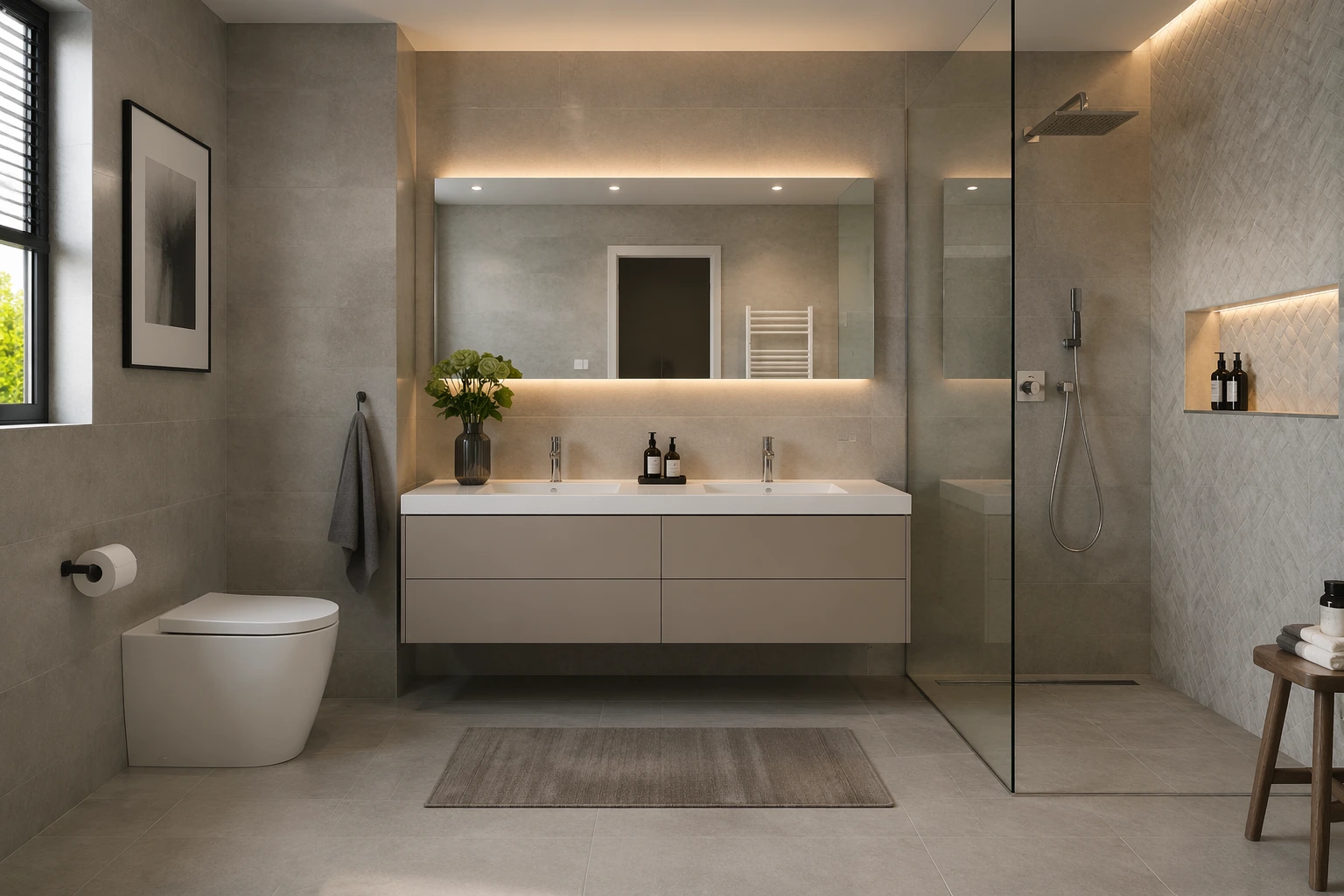
Bathroom flooring and tile installation uses ceramic, porcelain, vinyl, and peel-and-stick tiles on prepared subfloors. These materials create waterproof and slip-resistant surfaces for wet areas.
Porcelain tile and luxury vinyl are the most common choices due to durability and low maintenance. Peel-and-stick tiles are used for budget-friendly upgrades and quick installation.
Material type, tile size, and installation method affect cost, layout, and long-term performance. Proper grout sealing is required to prevent moisture damage and extend the lifespan.
Tile flooring cost and installation typically depend on material, labour, and layout complexity.
Book a Free Consultation to Discuss Your Project Needs!
Bathroom tile flooring costs vary based on material choice, labor, and installation complexity, making proper planning essential for budget control.
Most bathroom tile flooring projects fall within a moderate price range, depending on design and size. The average cost of bathroom tile flooring and installation is $10 to $50 per square foot, with most projects costing between $1,000 and $3,000.
The total cost is divided between materials, labour, and preparation work. Tile material typically costs $2 to $30+ per square foot. Labour ranges from $5 to $15 per square foot, while removal and preparation add another $1 to $4 per square foot.
Several key factors influence the final installation price. Tile type, floor size, pattern complexity, and subfloor condition all impact cost. Larger tiles reduce labour time, while complex patterns like herringbone or mosaic increase installation effort and pricing.
Bathroom flooring materials vary by water resistance, durability, cost, and installation method. Choosing the right type depends on moisture exposure, budget, and maintenance requirements.

Porcelain and ceramic tiles are durable and water-resistant. Porcelain is less porous and better for wet areas like showers. Both offer long lifespan and low maintenance.
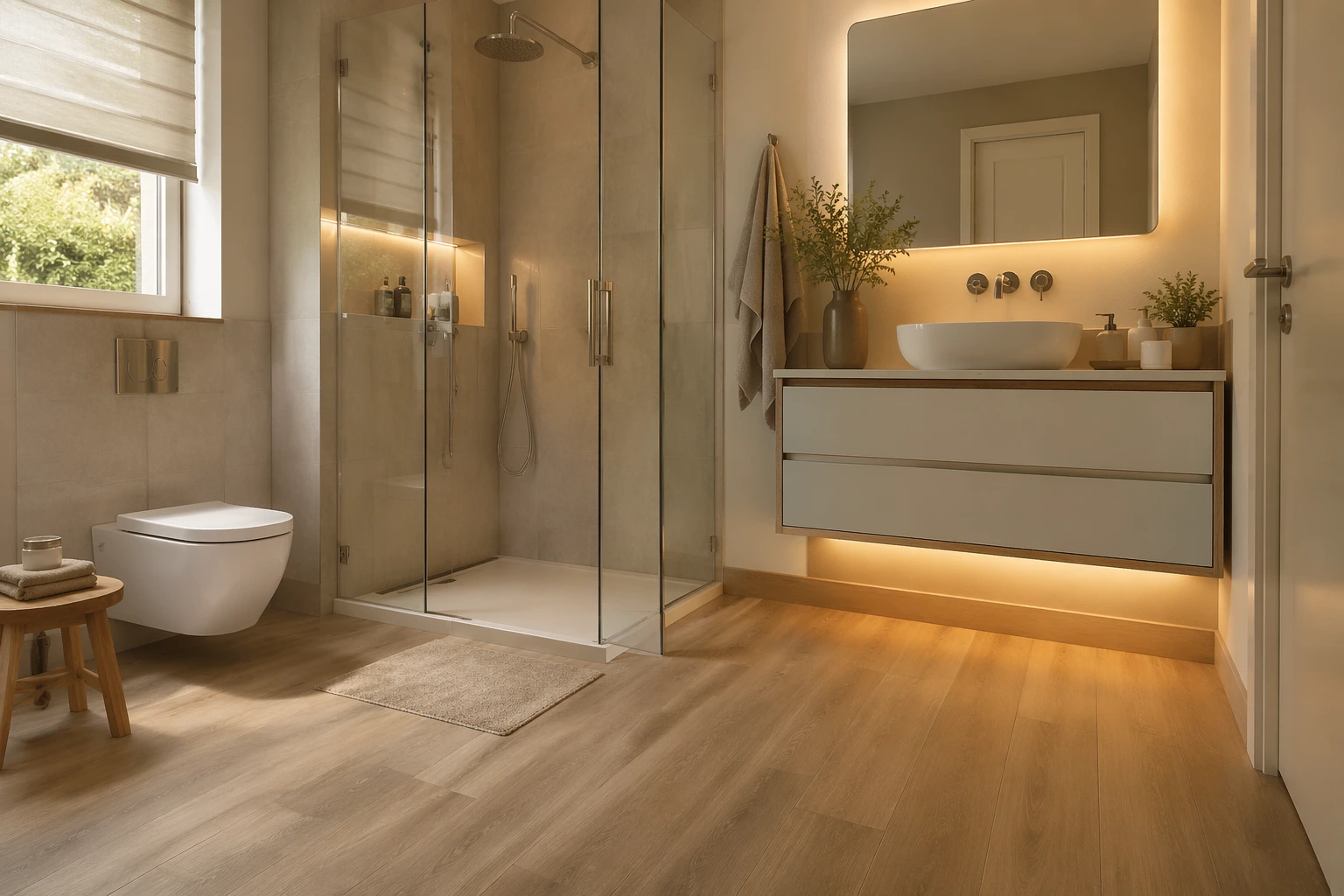
Vinyl tile flooring is waterproof, flexible, and cost-effective. It provides a warmer surface than tile and is easier to install. Suitable for quick upgrades and moisture-prone bathrooms.
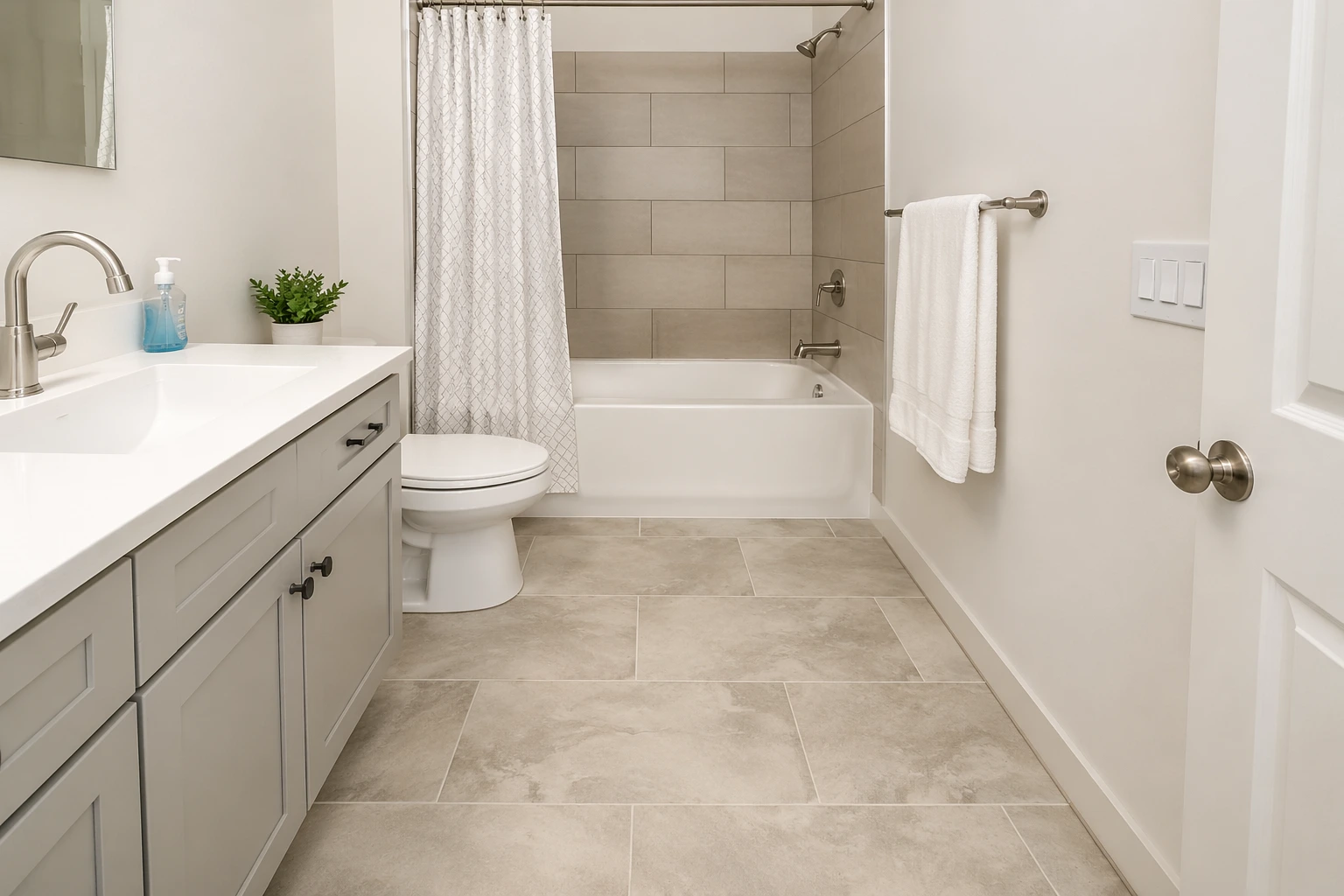
Peel-and-stick tiles are adhesive-backed vinyl tiles designed for fast installation. They are budget-friendly and DIY-friendly. Proper surface preparation is required for durability and moisture resistance.
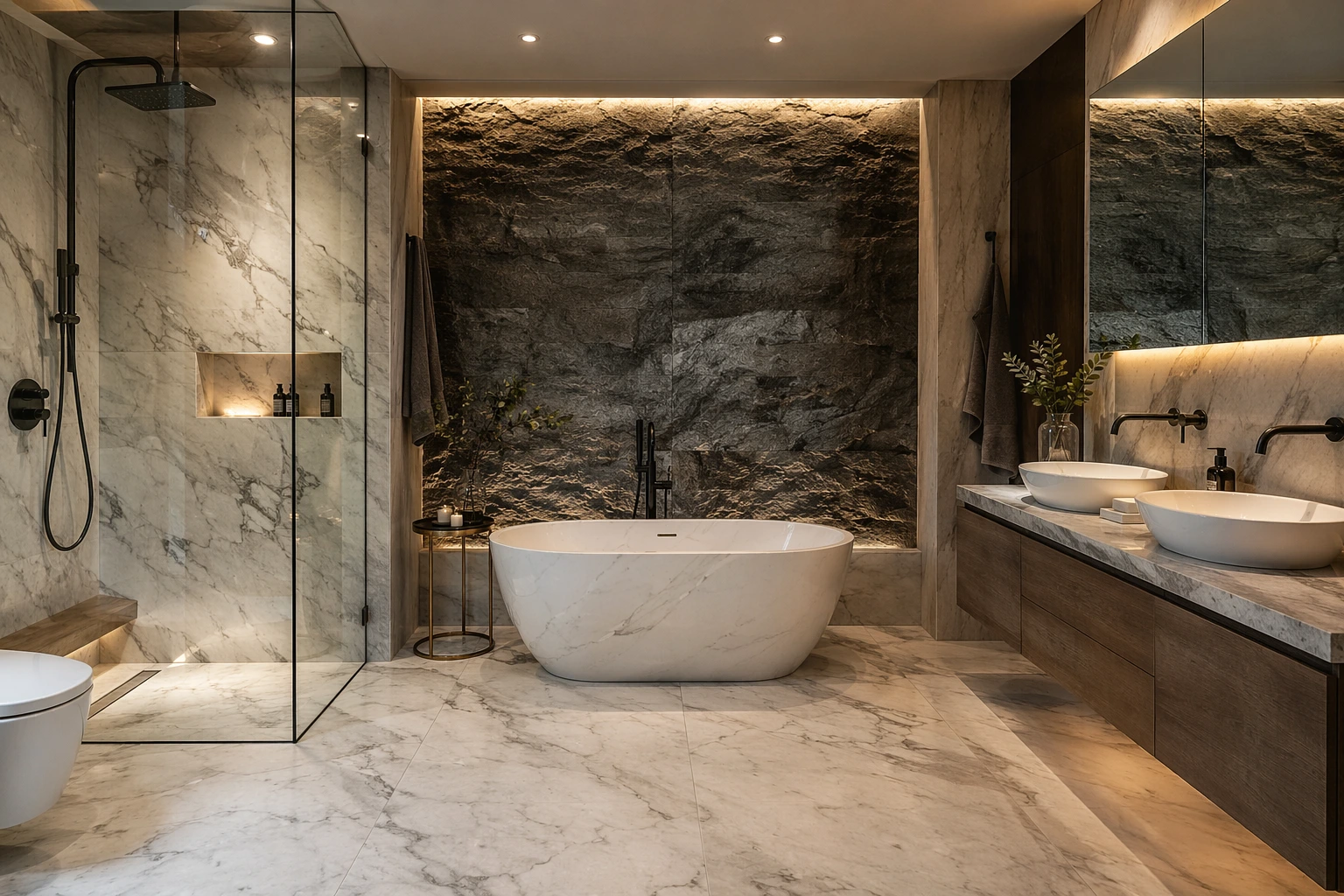
Natural stone tiles such as marble or slate provide a premium finish. They are durable but porous and require sealing. Maintenance is higher compared to ceramic or vinyl options.
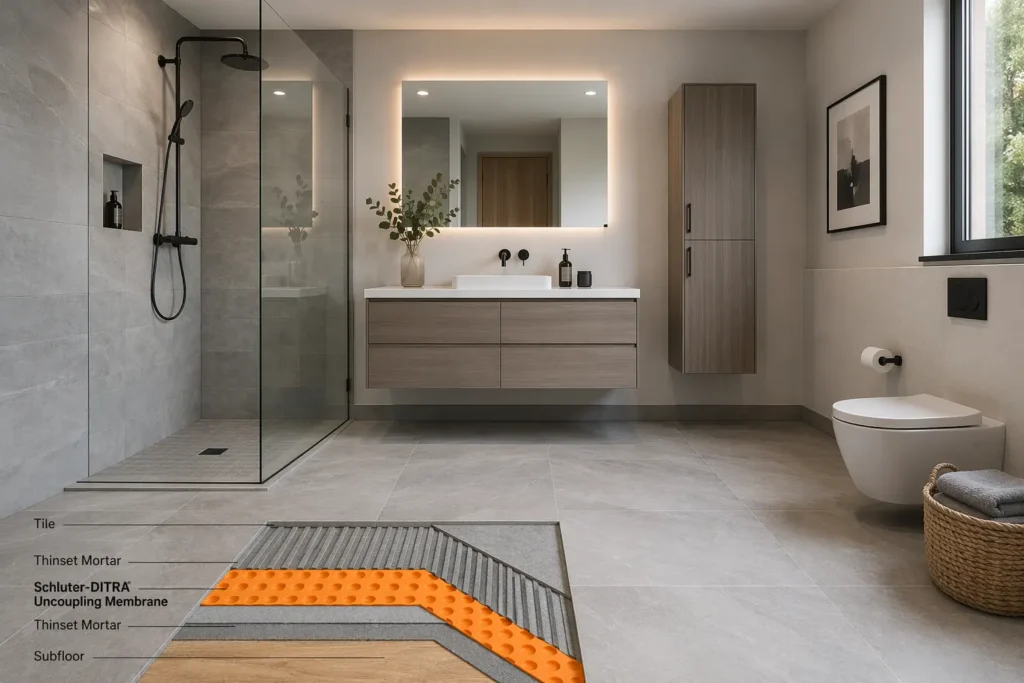
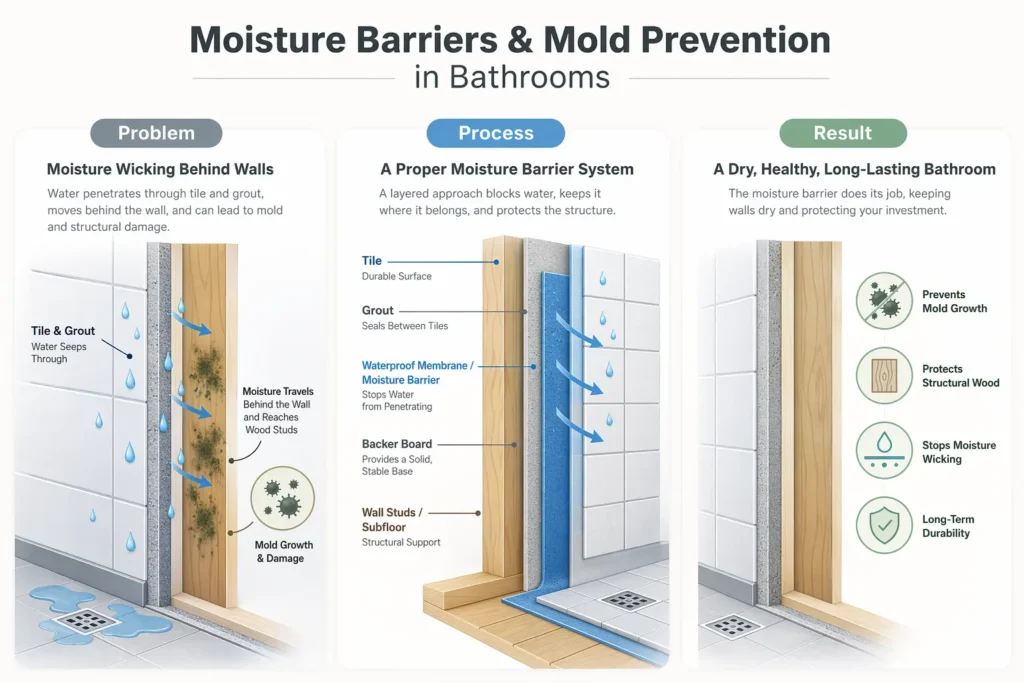
Our successful bathroom flooring relies entirely on the engineering hidden beneath the tile. While aesthetics matter, the primary goal of professional installation is to create a permanent, leak-proof barrier that protects your home’s structure.
At Bathroom Remodel RCA, we utilise advanced uncoupling membranes like Schluter-DITRA for our tile installations.
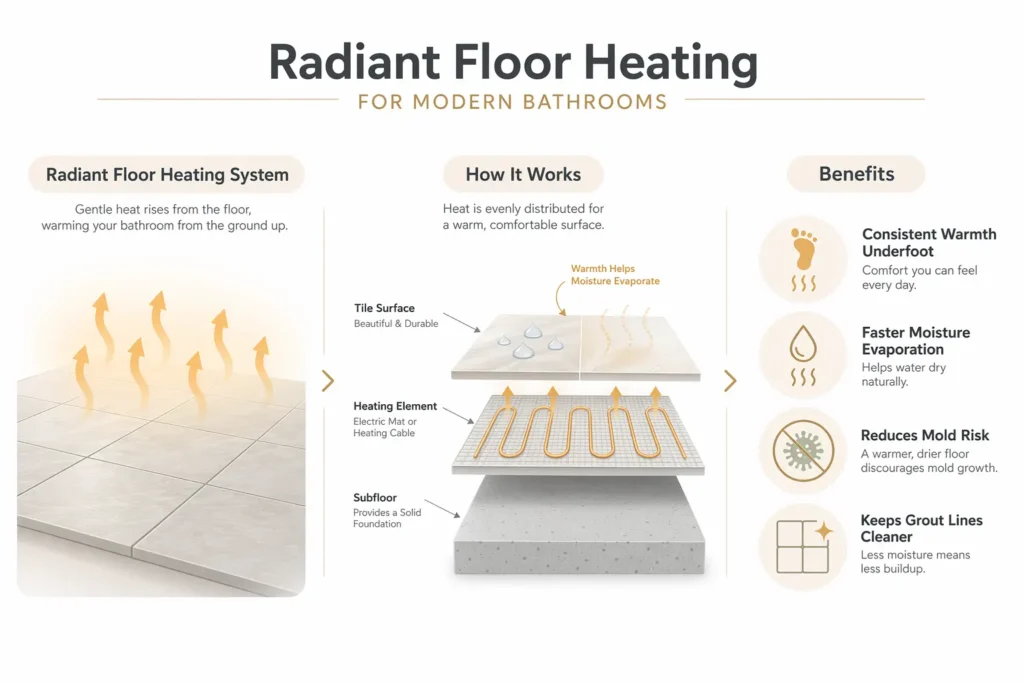
Many homeowners now request electric radiant floor heating systems during their remodel. These systems are installed directly beneath the tile to provide consistent, comfortable warmth.
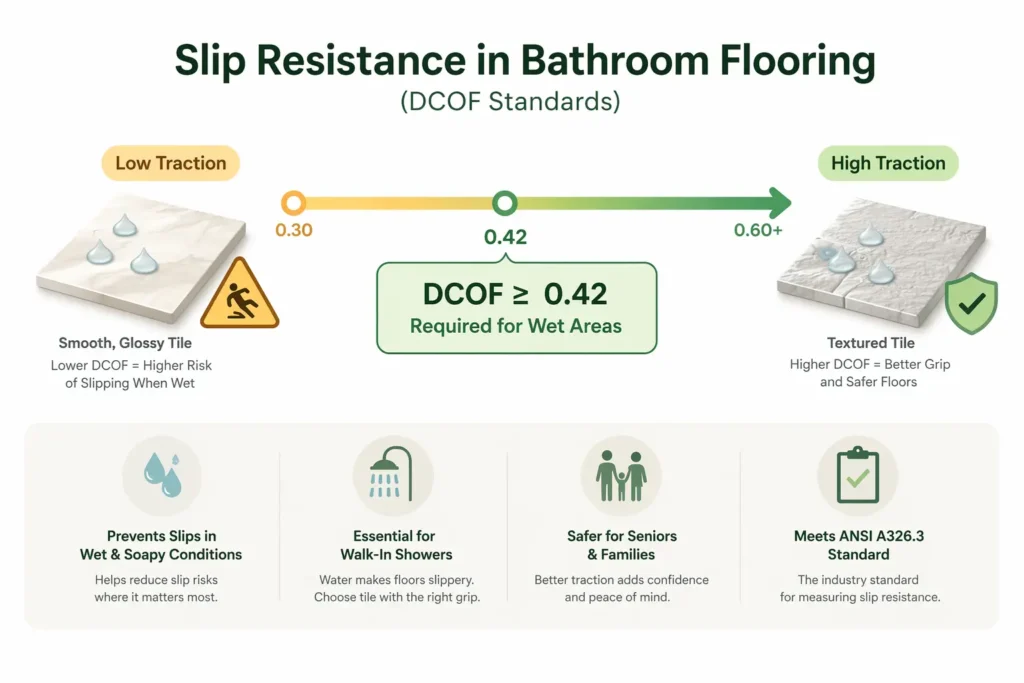
Safety is a core priority, particularly for walk-in showers and households with seniors. We ensure all floor tiles meet the ANSI A326.3 standard for slip resistance.
We do not rely on tile and grout alone to stop water.
Water resistance is critical in bathroom flooring due to constant moisture exposure. Flooring materials, grout type, and sealing method determine long-term durability and mold resistance.
Tile itself is water-resistant, but grout lines allow moisture penetration if not sealed.
Vinyl flooring provides a continuous waterproof layer, reducing the risk of water reaching the subfloor.
Grout sealing prevents water absorption, mold growth, and staining. It is applied after installation and requires periodic reapplication depending on usage.
Natural stone tiles such as marble or slate require both grout sealing and surface sealing to maintain durability and prevent moisture damage.
We suggest comparing multiple quotes with detailed breakdowns of labour and materials. This helps you identify fair pricing and avoid underpriced estimates that may lead to problems later.
Bathroom tile design affects visual contrast, space perception, and overall layout style. Pattern, colour combination, and tile material define how modern, classic, or decorative the bathroom looks.

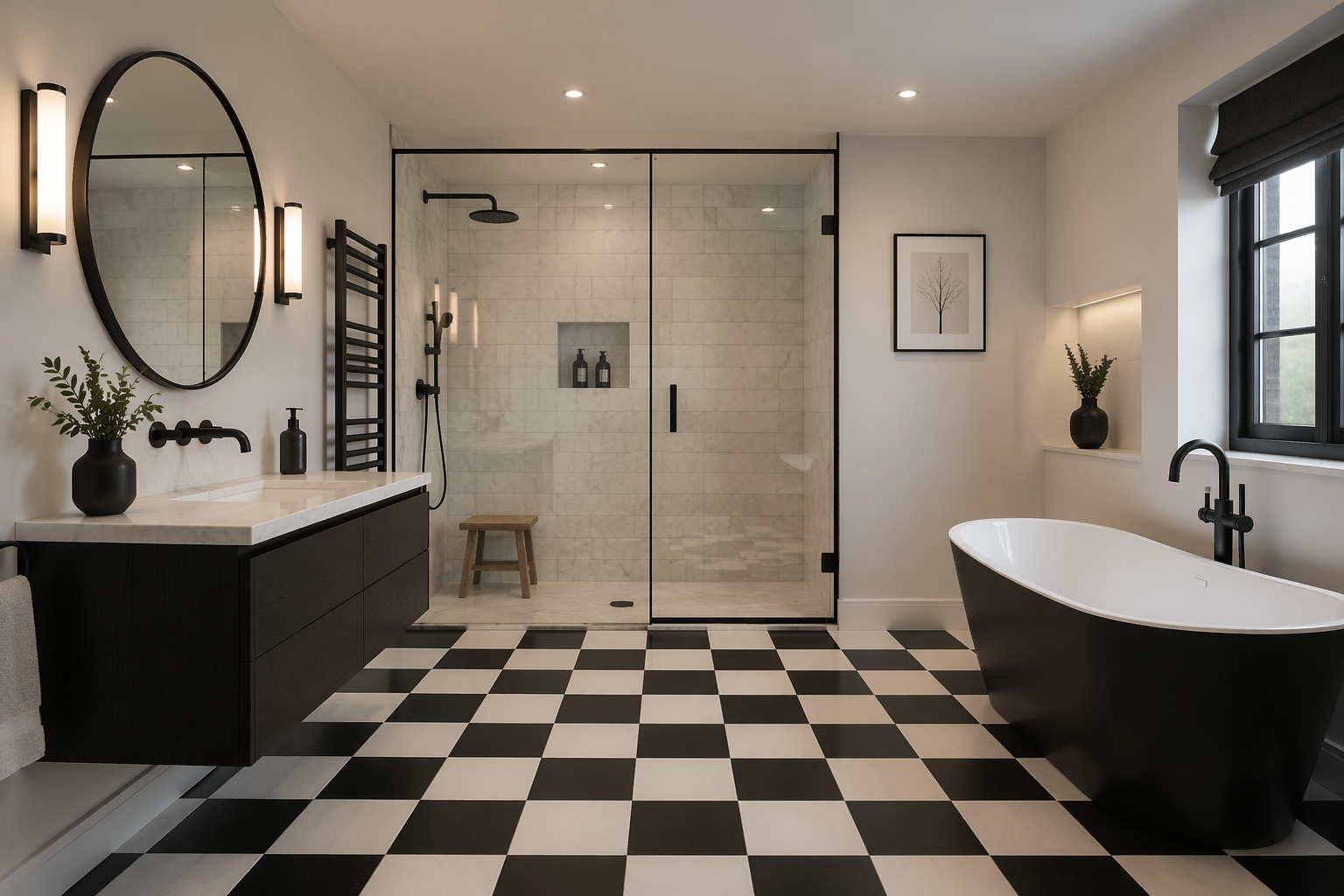
Black and white tile flooring creates a strong contrast and a clean layout. It works in both modern and classic bathrooms, especially in checkered or patterned tile designs. Also available in vinyl and peel-and-stick options for easier installation.
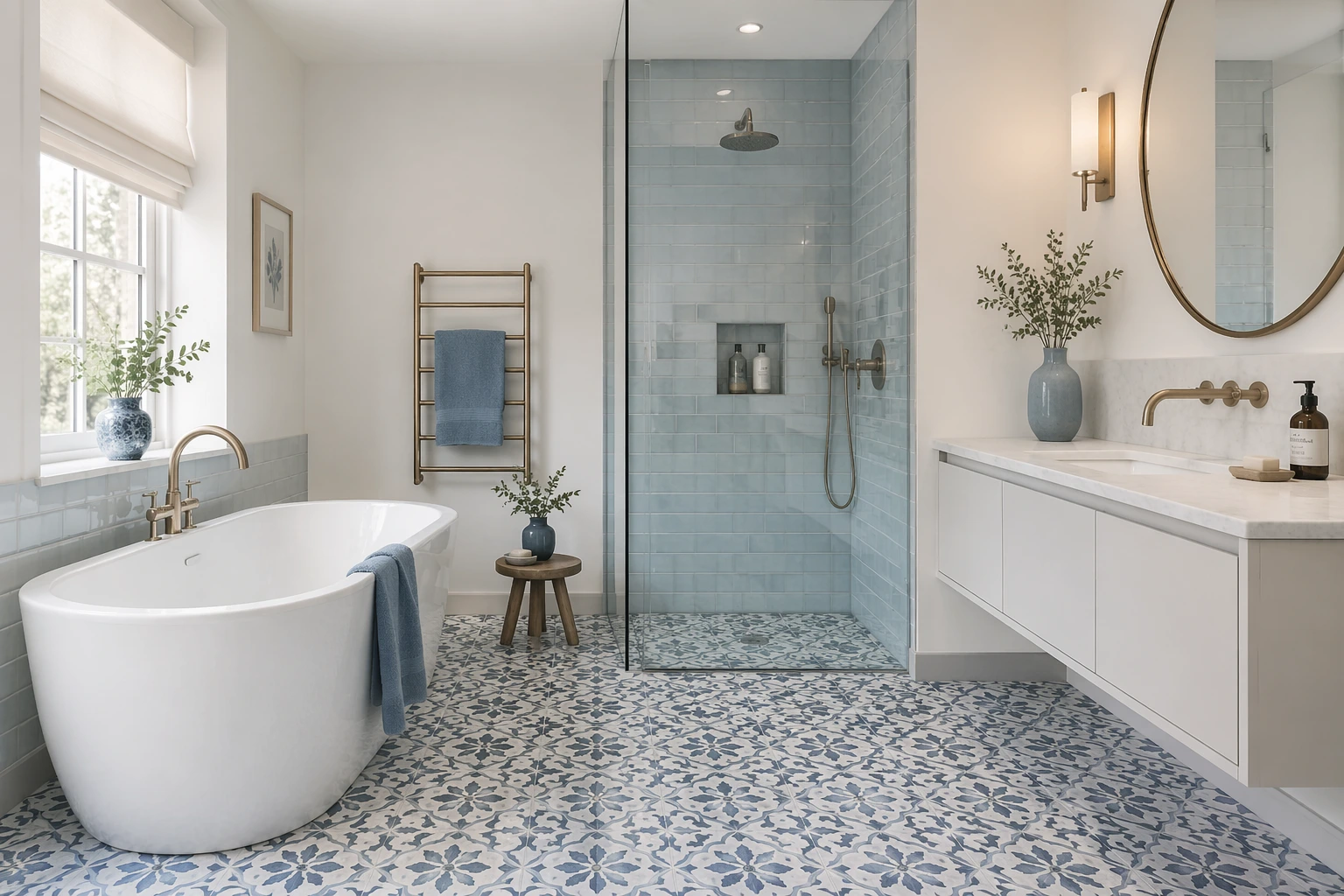
Blue and white tile flooring adds colour variation and visual depth. It is commonly used in coastal, decorative, and patterned bathroom designs. Suitable for feature floors or accent areas.
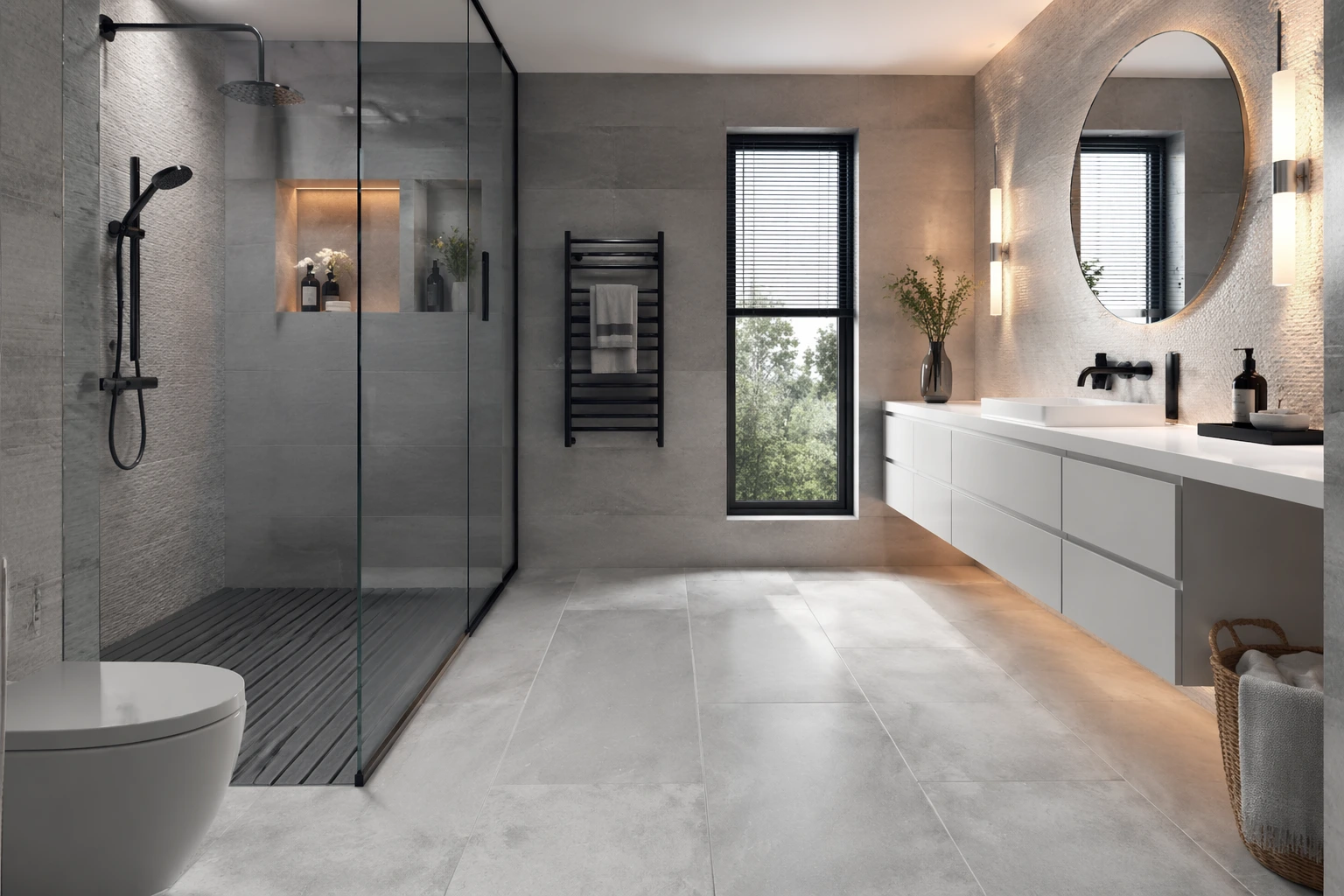
Grey and white tile flooring provides a neutral and balanced look. It fits modern bathroom layouts and works well with both light and dark fixtures. Often used in large-format tiles for a clean finish.
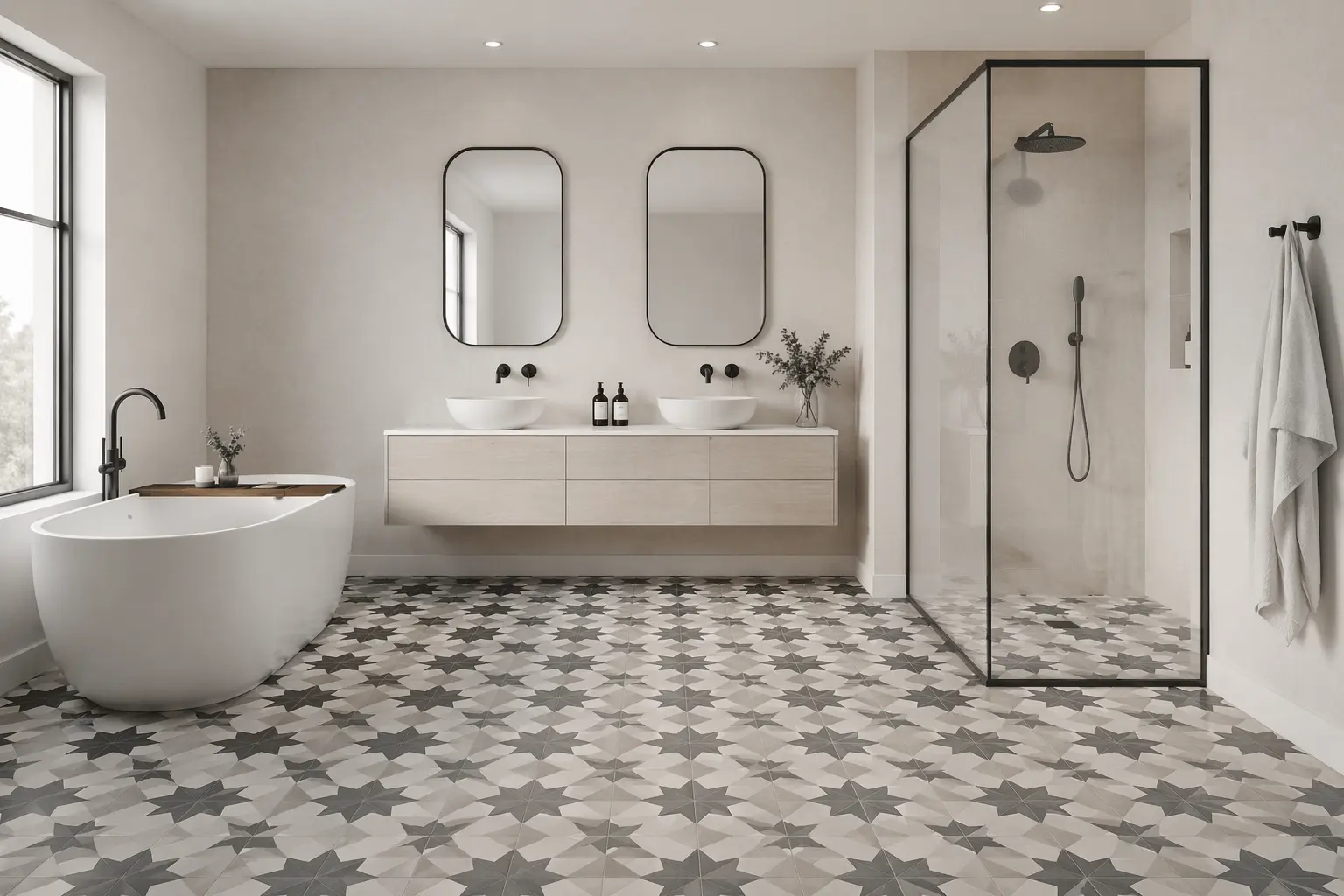
Star and cross tile patterns create a bold focal point. This design is used in vintage and statement bathrooms where flooring becomes the main visual element. Common in ceramic and porcelain tiles.
Tile flooring installation involves subfloor preparation, tile placement with adhesive, and grout sealing. Each step affects alignment, bonding strength, and long-term water resistance.
Remove old flooring, debris, and dust. Check for uneven areas and level the surface using a leveling compound if needed. A flat and stable subfloor prevents tile cracking and uneven grout lines.
Plan the layout from the centre of the room to maintain symmetry. Dry-lay tiles before installation to check spacing and alignment. Use spacers to create consistent grout joints and avoid uneven gaps.
Apply thin-set mortar using a notched trowel to ensure even coverage. Place tiles firmly and press them into the adhesive. Adjust alignment while the mortar is still workable to maintain a level surface.
Measure and cut tiles for corners, walls, and fixtures using a tile cutter or wet saw. Accurate cuts improve edge alignment and reduce visible gaps in the final layout.
Apply grout between tiles after the adhesive has cured. Fill all joints evenly and remove excess grout from the surface. Proper grouting strengthens the tile structure and supports water resistance.
Apply grout sealer to protect against moisture and staining. Natural stone tiles also require surface sealing. Clean the surface and allow curing time before regular use.
Tile flooring installation requires subfloor leveling, thin-set adhesive application, tile alignment, cutting, grouting, and sealing to ensure durability and water resistance.
The best bathroom flooring is porcelain tile or luxury vinyl because they are waterproof, durable, and easy to maintain.
Tile flooring and installation cost range from $10 to $50 per square foot, depending on material, labour, and project complexity.
Peel-and-stick floor tiles are water-resistant but not fully waterproof. Proper sealing and installation are required to prevent moisture damage.
Tile floors are sealed by applying a grout sealer after installation. Natural stone tiles also require surface sealing to prevent moisture absorption.
Bathroom flooring and tile installation in Riverside, CA connects tile selection, subfloor preparation, and grout sealing to create durable and water-resistant floor systems.